Creating a glossary is essential for any translation project. It serves as a tool for consistency and clarity. When considering how to prepare a glossary for your translation project, it’s crucial to gather terms specific to your subject area.
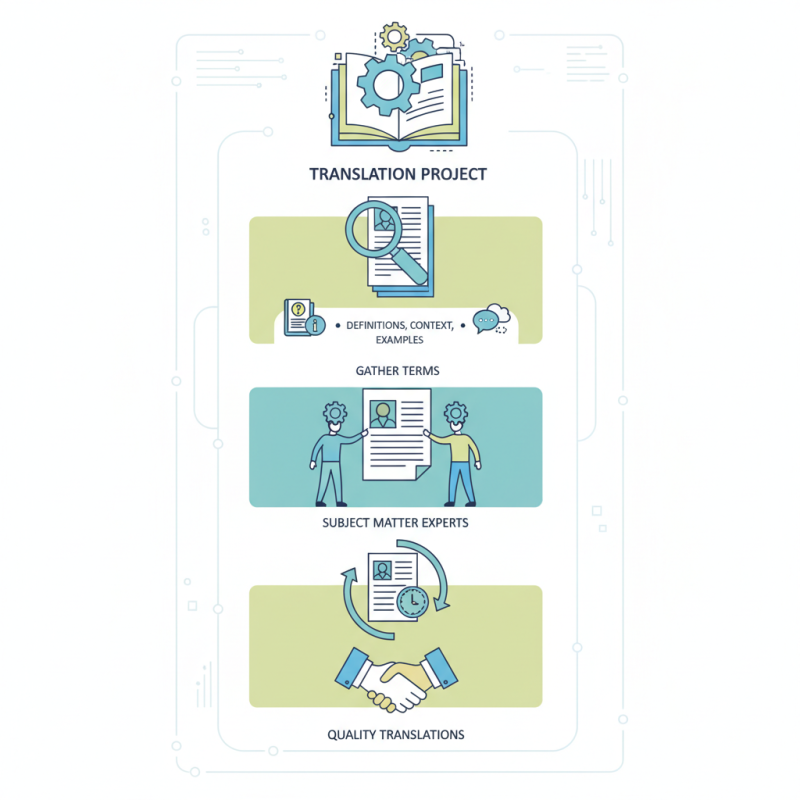
Start by identifying key terms that appear in your source material. Include definitions, context, and examples for each term. This not only aids translators but also ensures all team members have a common understanding.
Involve subject matter experts to refine your glossary. Their insights add depth and accuracy. However, remember that glossaries can evolve. Regular updates may be needed as projects progress. Embracing this iterative process enhances the reliability of your glossary, ultimately supporting quality translations.
A glossary plays a crucial role in translation projects. It serves as a reference that ensures consistency across translations. Through a well-developed glossary, translators can maintain a uniform understanding of key terms. This helps avoid misinterpretations. In specialized fields, precise terminology is vital. Without it, the message can easily be lost or distorted.
Creating a glossary involves collaboration. Input from subject matter experts can significantly enhance its quality. Often, translators may overlook nuanced meanings that experts can clarify. Over time, glossaries evolve and improve. Feedback from translators can reveal shortcomings and prompt necessary revisions. Therefore, ongoing collaboration and updates are essential for a reliable glossary.
A glossary not only aids translators but also benefits clients. It ensures that the final output aligns with the original intent and tone. However, compiling a glossary is not a straightforward task. It requires patience and attention to detail. Missteps during this process can lead to confusion. Regular checks and updates are crucial to keeping the glossary relevant and effective.
Creating a glossary for your translation project begins with identifying key terms and phrases. Start by compiling a list of essential vocabulary relevant to your subject matter. Reach out to subject matter experts. They add depth and clarity, ensuring your terminology is accurate.
Consider the context of each term. Some words may have different meanings in varying contexts. Be cautious about nuances in language that can alter the intended message. Utilize resources like academic articles or industry-specific documents to draw inspiration. Online forums can also be a rich source of discussion about particular terms.
Keep your glossary dynamic. As your project evolves, so should your list of terms. Regular revisions can improve accuracy and relevance. Involve your team in this process. Their insights can reveal gaps you may not have noticed. This teamwork fosters a stronger, more reliable glossary for your readers.
Choosing the right format for your glossary document is crucial for any translation project. A well-structured glossary enhances clarity and consistency. Research shows that 63% of project delays occur due to misunderstandings or inconsistencies in terminology. Selecting a format that suits your team’s needs is the first step to mitigating these issues.
Excel spreadsheets and shared documents are popular choices. They allow for easy updates and collaboration. However, these formats can also lead to errors, especially if multiple people edit them simultaneously. A database system could offer a more stable solution for larger teams. Also, it’s vital to keep user-friendliness in mind, as complex formats can hinder productivity.
**Tips:** Ensure your glossary is easily accessible to all team members. Use simple language and clear definitions. Regularly review and update the glossary to address any inconsistencies. Regular feedback sessions can also lead to improvements. A good glossary is not just a list; it evolves with the project’s needs.
Creating a glossary for your translation project is crucial. One key aspect is collaborating with your translators to refine glossary entries. Engaging translators ensures that each term is well-defined and accurately reflects cultural nuances. Research from the Globalization and Localization Association (GALA) indicates that projects with a well-prepared glossary reduce misunderstanding by 30%.
Translators bring invaluable expertise. They often have insights into terminology that might not be clear to project managers. A study by Common Sense Advisory found that 70% of translators prefer to work with a glossary. This preference highlights the importance of input from those who will handle the text. Their feedback can illuminate potential issues and improve the overall quality of translations.
When refining your glossary, consider these tips: Invite translators to provide examples of usage for each term. This practical approach can help clarify meaning. Also, don't hesitate to revise entries based on translator feedback. Flexibility is often needed in this process, as rigid glossaries may hinder effective communication. A glossary is a living document; it should evolve along with the project.
Regularly updating and maintaining your translation glossary is crucial for successful projects.
A comprehensive glossary ensures consistency across translations.
According to recent surveys, 70% of translators believe that a well-maintained glossary enhances their efficiency.
However, many teams fail to update their glossaries frequently, leading to inaccuracies in terminology.
As your project evolves, new terms emerge. If a glossary is not updated, these terms might be lost.
In fact, 62% of translation professionals find that outdated glossaries can create confusion in multiple languages.
Regular reviews can help keep your glossary relevant.
Set a schedule to revisit your glossary. Encourage team members to suggest new terms they encounter.
This collaborative approach can maintain high-quality translations.
Translation technology can assist in maintaining glossaries.
Tools for automatic updates can ensure your term base remains current.
Still, relying solely on technology may lead to oversight, so manual checks are necessary.
Balancing technology with human insight is key.
This is a point where many translation teams struggle.
They often rely too heavily on tools while neglecting the value of human knowledge.
: Start by identifying key terms and phrases relevant to your subject matter.
They provide depth and clarity, ensuring accurate terminology usage.
Some words have different meanings in various contexts, affecting the intended message.
Regular updates are crucial as new terms emerge throughout the project.
About 70% of translators believe this is true.
Outdated glossaries can create confusion, with 62% of professionals noticing this issue.
Team insights can reveal gaps and improve the glossary's accuracy.
Technology can assist with automatic updates, but manual checks are also necessary.
Over-reliance may lead to missing the value of human knowledge and insights.
A static glossary risks becoming irrelevant and less effective over time.
Creating a comprehensive glossary is essential for ensuring clarity and consistency in translation projects. To answer the question of how to prepare a glossary for your translation project, it's crucial first to understand its importance. A well-structured glossary can significantly enhance communication and reduce misunderstandings.
Start by identifying key terms and phrases relevant to your project, as these will form the backbone of your glossary. Choosing the right format for your glossary document is equally important, as it must be easily accessible and user-friendly for all contributors. Collaborating with translators to refine glossary entries can help ensure accuracy and context, while regularly updating and maintaining the glossary will keep it relevant throughout the project’s lifecycle. By following these steps, you can create a valuable resource that streamlines the translation process.

Flash Translation